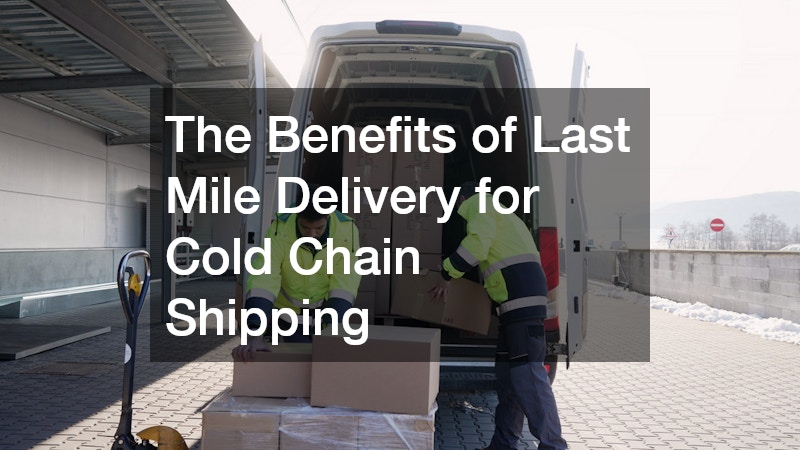
The Benefits of Last Mile Delivery for Cold Chain Shipping
An overview of how last mile delivery impacts cold chain shipping operations. The growing demand for perishable goods like pharmaceuticals and fresh food items necessitates efficient delivery methods. Timely deliveries are crucial in maintaining the integrity of cold chain logistics. The last mile delivery ensures that products remain within their temperature range until they reach the customer. Delays can lead to compromised product quality, making efficient last mile strategies essential. Companies are investing in real-time tracking technologies to mitigate such risks. This efficiency ultimately leads to improved customer satisfaction and reduced waste. As a result, businesses are better equipped to meet stringent regulatory requirements. Advanced technologies are being integrated into logistics to enhance last mile delivery. Automated systems and machine learning help optimize route planning for faster delivery. Technology integration not only improves delivery time but also helps in maintaining the cold chain. Smart sensors and IoT devices offer continuous monitoring of temperature-sensitive shipments. These innovations make it possible to address issues in real-time, preserving product quality. Consequently, faster resolutions can be made if issues arise during transit. The Internet of Things (IoT) plays a pivotal role in monitoring the temperature of shipments. Sensors communicate data in real-time to ensure that cold chain parameters are met. If a temperature anomaly occurs, corrective actions can be taken immediately. This is vital for reducing product spoilage and ensuring quality. IoT also provides transparency to consumers worried about the state of their perishable goods. With access to detailed shipment data, trust in cold chain logistics is reinforced. The use of Blockchain technology enhances the accuracy and transparency of last mile delivery. Blockchain records are immutable, providing a reliable audit trail for each delivery. This transparency reassures both businesses and consumers about the integrity of the logistics process. By creating incorruptible records, blockchain helps maintain product authenticity. Integration of blockchain in cold chain logistics is becoming more prevalent. It holds suppliers accountable and ensures adherence to best practices. Temperature control is essential for preserving the quality and safety of temperature-sensitive goods. Deviating from ideal temperature conditions can lead to spoilage and increased health risks. The last mile is critical as it determines whether the product reaches the consumer in its intended state. This focus on temperature control ensures high product standards and customer satisfaction. Companies are increasingly relying on advanced monitoring solutions to achieve this. The deployment of specialized insulated packaging is part of this approach. Regulations mandate strict controls over the distribution of cold chain products. Proper temperature management in the last mile ensures compliance with these regulations. Failure to comply can result in severe penalties and reputational damage. As a precaution, companies incorporate detailed protocol checks during the last mile process. Such compliance not only protects consumers but also fortifies brand integrity. Companies that master this aspect stand to gain a competitive edge in the market. While enhancing delivery services, businesses must also consider cost implications. Efficient last mile delivery can be costly, yet it’s vital for sustaining product quality. The strategy lies in optimizing routes and employing energy-efficient transport solutions. By doing so, companies can achieve a balance between cost-efficiency and quality service delivery. Collaborative logistics models may also decrease costs associated with last mile delivery. Companies can share resources and infrastructure to increase operational efficiencies. Last mile delivery shapes the organization of distribution networks in cold chain logistics. Efficient networks demand advanced infrastructure and coordinated logistics systems. This has financial implications as businesses seek to modernize their logistics frameworks. However, these investments tend to pay off through improved network resilience. Furthermore, streamlined networks contribute to faster delivery times and reduced operational waste. Companies can hence maintain a sustainable model while satisfying customer expectations. Today’s customers expect faster delivery of their products without compromising quality. As customer demands for quick turnarounds increase, logistics companies must adapt. Innovations such as drone deliveries or autonomous vehicles are explored to meet this need. These improvements are critical in staying competitive in a rapidly evolving market. Adaptation includes partnerships with tech firms to boost delivery speed and efficiency. Offering more delivery options is a strategic response to these growing customer expectations. A new wave of personalization is evident in last mile delivery services. Customers appreciate customized delivery options that fit their schedules and preferences. Logistics providers are leveraging data analytics to provide better customer experiences. Personalization enhances customer satisfaction and fosters brand loyalty. This trend encourages companies to refine their service offerings continually. The use of technology like mobile apps facilitates real-time communication with customers. How does last mile delivery improve cold chain efficiency?
Importance of timely deliveries
Technology integration in logistics
What technologies are impacting last mile delivery?
Role of IoT in temperature monitoring
Blockchain for transparency and accuracy
Why is temperature control crucial in last mile delivery?
Maintaining product quality and safety
Ensuring regulatory compliance
What are the cost implications of last mile delivery in cold chain logistics?
Balancing cost with quality service
Impact on distribution networks
How do customer expectations shape last mile delivery improvements?
Demand for faster deliveries
Personalization in delivery services