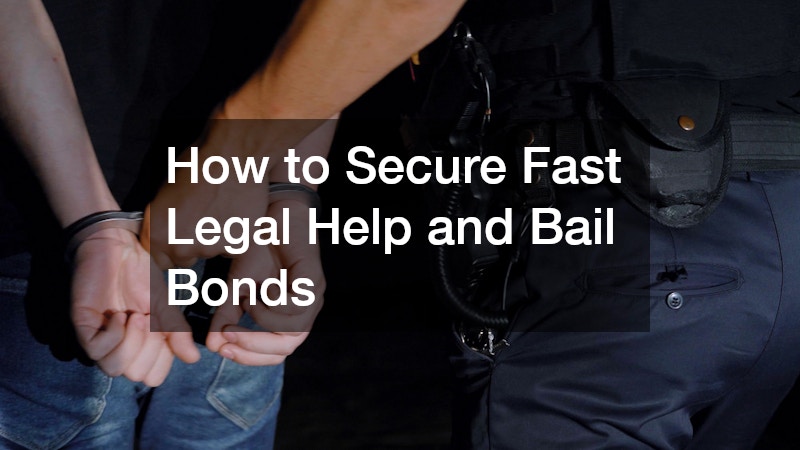
How to Secure Fast Legal Help and Bail Bonds

The sudden reality of a legal emergency is one of the most stressful, disorienting, and terrifying experiences an individual or a family can face. Whether you are receiving a panicked phone call in the middle of the night from a loved one or you find yourself unexpectedly sitting in the back of a police cruiser, the psychological shock is immense. In these volatile moments, the natural human response is either to freeze in panic or to act impulsively out of a desperate desire to simply make the problem go away. However, acting on panic is the fastest way to permanently compromise your freedom and your future.
The criminal justice system moves with a cold, mechanical efficiency. It is entirely indifferent to your fear, your confusion, or your lack of preparation. The decisions that are made within the first twenty-four to seventy-two hours following an arrest heavily influence the entire trajectory of the situation, dictating both the likelihood of pre-trial freedom and the ultimate outcome of the case. A misstep during an initial interrogation or a delay in securing funds for release can result in weeks of unnecessary incarceration and a severely weakened position in the courtroom.
Navigating this high-stakes labyrinth requires a clear head and a strategic, methodical approach. This comprehensive guide serves as your roadmap through the chaos of a legal crisis. We will explore the critical importance of immediately asserting your constitutional rights, the intricacies of selecting highly specialized representation, and the mechanical realities of the court system. Furthermore, we will break down the financial strategies necessary to secure your freedom and fund your defense without bankrupting your family. By understanding these mechanisms before or during a crisis, you empower yourself to replace panic with decisive, informed action.
Asserting Your Rights and Selecting Immediate Representation

The moments immediately following an arrest or detainment are often the most legally perilous. Law enforcement officers are highly trained professionals skilled in the art of interrogation, psychological pressure, and information extraction. Their primary goal during this phase is to gather actionable evidence to build a strong case for the prosecution. Your primary goal must be self-preservation, which begins with the absolute, unwavering invocation of your constitutional protections.
Exercise Your Right to Remain Silent Until Counsel Arrives
There is a common, highly destructive misconception that if you simply cooperate with law enforcement and “explain your side of the story,” the officers will realize there has been a misunderstanding and let you go. This is a dangerous fallacy. Any statement you make, however casual or seemingly innocent, can and will be weaponized against you. An offhand remark, an apology, or a slight inconsistency in your timeline will be documented and used to establish guilt or dismantle your credibility.
-
The Power of the Fifth Amendment: You have the absolute right to remain silent. You cannot be penalized in a court of law for refusing to answer police questions.
-
The Script for Invoking Your Rights: You must invoke these rights verbally and unambiguously. Simply staying quiet is not enough. You must state clearly: “I am invoking my right to remain silent, and I will not answer any questions without my attorney present.” Once this statement is made, you must physically stop talking. Do not engage in small talk, do not ask the officers questions, and do not let prolonged, uncomfortable silences pressure you into speaking.
-
The Necessity of Immediate Advocacy: Securing a qualified criminal defense lawyer the moment you are permitted a phone call is your strongest shield against self-incrimination. They will immediately interface with law enforcement on your behalf, preventing coercive interrogation tactics and working to ensure your rights are protected during the chaotic booking phase and the initial arraignment, where the baseline facts of the case are formally presented.
Identify Counsel with Specific Courtroom Experience for Your Exact Charges
The legal field is incredibly vast and highly compartmentalized. You would not hire a cardiologist to perform brain surgery, and you should not hire a corporate contract attorney to defend your physical freedom. General practitioners or family attorneys lack the nuanced understanding of penal codes, evidentiary procedures, and prosecutorial tactics required to dismantle a serious case.
You must find an advocate whose daily practice revolves around the exact type of charges you are facing. For instance, if the allegations involve physical altercations, domestic disputes, or threats of violence, securing a seasoned assault lawyer is paramount. These specialists understand the intricate dynamics of self-defense claims, the burden of proof required for intent, and the strategies for cross-examining witnesses in highly emotionally charged scenarios. When vetting an attorney in those crucial early hours, demand to know their specific track record handling the exact statute you are accused of violating.
Evaluating and Retaining Long-Term Defense Advocates
Securing emergency representation gets you through the initial shock of an arraignment, but the journey to a final resolution—whether through a dismissal, a plea agreement, or a full jury trial—can take months or even years. Retaining the right long-term advocate requires a thorough evaluation of their financial transparency, their strategic approach, and their localized influence within the specific courthouse where your fate will be decided.
Analyze Fee Structures and Retainer Agreements Transparently
Defending against state or federal charges is a massive logistical undertaking, and the financial reality of high-level legal representation can be daunting. A reputable firm will demystify this process immediately, providing crystal-clear expectations regarding costs, billing methods, and anticipated expenses. You must never sign a legal agreement without fully understanding how and when you will be charged.
When consulting with potential criminal attorneys, it is essential to ask direct, uncomfortable questions about money. Are expert witnesses included in the base fee? What are the hourly rates for the paralegals who will be handling your paperwork? Do they charge for quick phone calls or emails? Top-tier practitioners understand that their clients are under immense stress and will structure their agreements so you know precisely what a trial defense will cost compared to a pre-trial resolution strategy.
| Fee Structure Type | How It Works | Best Suited For |
| Flat Fee | A single, upfront payment covering the entirety of the case (or specific phases, like pre-trial). | Misdemeanors, predictable cases, and clients who need absolute budget certainty. |
| Hourly Billing | The client is billed for every fraction of an hour spent on the case by the attorney and staff. | Highly complex, unpredictable federal cases that may stretch on for years. |
| Upfront Retainer | A lump sum deposited into a trust account; the attorney bills hourly against this balance until depleted. | Serious felonies requiring extensive investigation, motions, and expert testimony. |
Verify Local Track Records and Relationships with Court Officials
While a brilliant legal mind is essential, the practice of law is inherently a human endeavor. The specific municipality or county where the arrest occurred has its own unwritten rules, internal politics, and procedural quirks. A defense strategy that works flawlessly in one county might irritate a judge in the neighboring county.
This is why hiring a deeply entrenched criminal lawyer who practices extensively within your specific jurisdiction provides a massive tactical advantage. An advocate who has spent years walking the halls of that specific courthouse will know the unique tendencies of the judge assigned to your case. They will understand which prosecutors are reasonable negotiators and which are politically motivated hardliners. They will even know the county court clerks who control the flow of vital paperwork. This hyper-local familiarity can expedite administrative hurdles, influence the tone of early negotiations, and provide invaluable insight into how the court will likely perceive the evidence against you.
Accelerating Release Through Pre-Trial Bond Mechanisms

The period between an arrest and a court date is meant to be a time to prepare a robust defense, maintain employment, and support your family. However, the system requires a financial guarantee—known as bail—to ensure the defendant returns for their scheduled hearings. Understanding how this system works is critical to minimizing the physical and psychological damage of being locked in a holding facility.
Master the Mechanics of the Booking and Arraignment Process
Before a release can be secured, the defendant must undergo the agonizingly slow booking process. This involves confiscating personal property, taking mugshots, recording fingerprints, and running the individual through national databases to check for outstanding warrants in other jurisdictions. Only after this administrative gauntlet is complete will a judge or magistrate hold an arraignment to officially read the charges and set the bail amount.
Bail can be satisfied in several ways. A cash bond requires paying the full, exact amount to the court in liquid funds, which is returned at the end of the case if all appearances are made. A property bond involves leveraging real estate equity to satisfy the court, a notoriously slow process requiring appraisals and liens. The most common solution, however, relies on commercial sureties. Licensed bail bond agents step in to act as financial guarantors, pledging the full bail amount to the court in exchange for a non-refundable percentage fee paid by the defendant or their family. This allows an individual to secure their freedom for a fraction of the total cost upfront.
Partner with Licensed Professionals Available Outside Standard Business Hours
The reality of the justice system is that crises rarely adhere to a standard nine-to-five schedule. Arrests disproportionately occur late at night, during weekends, or in the middle of major holidays when banks and traditional offices are closed. Every hour spent waiting for an office to open is an hour the defendant spends in a dangerous, overcrowded holding cell, unable to communicate effectively with their defense team.
To mitigate this, you must seek out agencies that operate around the clock. Securing 24 hour bail bonds ensures that the moment the magistrate sets the release amount, a licensed professional is already filing the necessary paperwork with the jail’s intake desk. When vetting these agencies in the middle of the night, verify their state licensing over the phone, ask for a clear explanation of the release timeline for that specific county jail, and ensure they have a local agent capable of physically driving to the facility immediately to post the surety.
Minimizing the Financial Strain of Securing Freedom
Securing a prompt release is vital, but the financial burden of doing so can devastate a family’s savings overnight. The premium paid to a surety agency is a non-refundable fee for their service; even if the charges are completely dropped the next morning, that money is gone. Navigating this financial hurdle requires careful negotiation, a clear understanding of contracts, and a sober assessment of the risks involved.
Negotiate Flexible Payment Plans and Understand Premium Structures
In most jurisdictions, state law regulates the exact premium a surety agency can charge. This is typically set between ten and fifteen percent of the total bail amount. For example, if the judge sets bail at $50,000, the mandatory premium will be between $5,000 and $7,500. While the percentage is fixed by law, how that percentage is collected is often up to the agency’s discretion.
If you do not have the full premium in liquid cash, do not panic. The industry is highly competitive, and many reputable companies offer affordable bail bonds through structured, zero-percent interest financing options for qualified applicants. This might involve a lower down payment followed by weekly or monthly installments. When negotiating these terms, you must read the fine print aggressively. Beware of less scrupulous agencies that advertise suspiciously low down payments but hide exorbitant processing fees, late penalties, or annual renewal charges deep within the contract language.
Know the Obligations and Risks of Acting as a Co-Signer
If the defendant cannot secure their own release, a family member or friend is often asked to step in as an indemnitor, commonly known as a co-signer. Providing bail bond services for a loved one is a massive legal and financial commitment that should never be undertaken lightly or out of blind guilt. When you co-sign, you are entering into a legally binding contract guaranteeing the defendant’s performance.
If you choose to take on this responsibility, you must strictly enforce the following obligations:
-
Total Accountability: You are legally responsible for ensuring the defendant attends every single scheduled court appearance, arraignment, and hearing, without exception.
-
Constant Communication: You must notify the surety agency immediately of any changes to the defendant’s residential address, employment status, or contact information.
-
Financial Liability: Understand the ultimate risk. If the defendant decides to flee the jurisdiction and miss court, the judge will forfeit the bond. The agency will then have the legal right to sue you, garnish your wages, or foreclose on your property to recover the full face value of the original bail amount, plus bounty hunter recovery fees.
Liquidating Assets Safely to Fund Emergency Legal Costs
Even with flexible payment plans, the upfront costs of securing a top-tier legal defense and covering a surety down payment require immediate access to significant capital. For the vast majority of families who do not keep thousands of dollars in emergency savings, raising this cash requires liquidating physical assets. Doing this under extreme duress makes you highly vulnerable to predatory pricing, so you must approach asset liquidation strategically.
Appraise High-Value Property for Swift Collateral or Cash
When facing a ticking clock, luxury goods, precious metals, and high-end electronics are often the fastest route to liquid cash. However, you must understand the difference between retail value, appraisal value, and melt value. A diamond ring that was purchased for $5,000 at a retail store will not yield $5,000 in an emergency sale. Buyers are looking at the wholesale intrinsic value of the raw materials, minus their required profit margin.
To avoid being exploited in a moment of desperation, you must carefully vet the buyers. Seek out established, licensed places to sell jewelry, bullion, and luxury watches. Look for buyers who have certified gemologists on staff and who use state-certified scales in plain view. Never mail your items to an online buyer during a time-sensitive emergency, as the evaluation and payment process can take weeks. Instead, visit multiple local, reputable buyers to get quick, independent verbal evaluations. This forces them to compete for the item and gives you a realistic baseline of its actual immediate cash value.
Leverage Short-Term Lending Options for Immediate Liquidity
If parting with a family heirloom permanently is emotionally unacceptable, you can leverage the asset without selling it outright. Short-term collateral lending provides a way to secure immediate cash while retaining the legal right to recover the item once the legal dust settles and you can access other funds.
Utilizing a local pawn store is the most direct method for securing a collateral loan. In this scenario, the broker appraises the item and offers a cash loan based on a percentage of its resale value. They keep the item in a secure vault, and you walk out with the cash needed to pay the attorney or the surety agent. You are then given a set timeframe—usually thirty to ninety days—to repay the principal loan amount plus a state-regulated interest fee to reclaim your property.
While this provides instant liquidity without credit checks, the risks must be managed carefully:
-
High Interest Rates: Collateral loans carry significantly higher interest rates than traditional bank loans. Ensure you understand the exact monthly finance charge.
-
Strict Repayment Windows: If you fail to repay the loan or the monthly interest extension fee by the deadline, the broker assumes full legal ownership of the item and will place it on their sales floor. Only use items as collateral if you are emotionally prepared to lose them in a worst-case scenario.
The Power of Methodical Action Over Panic
Surviving a sudden legal crisis requires an immense amount of mental fortitude. The justice system is an overwhelming, adversarial machine designed to secure convictions, and it thrives on the confusion and panic of the accused. The most powerful weapon you have in this scenario is the ability to slow down, compartmentalize your fear, and rely on structured, methodical decision-making. Exercising your constitutional right to remain silent is not an admission of guilt; it is the ultimate assertion of your rights as a citizen.
The path to protecting your future relies on a dual engine of defense: swift, ethical pre-trial release mechanisms combined with aggressive, localized legal advocacy. By securing your physical freedom through appropriate financial channels, you gain the time and mental clarity required to help your legal team build an impenetrable defense. By thoroughly vetting your advocates and understanding the financial obligations of the process, you strip away the unknown variables that cause so much anxiety.
Do not wait for a crisis to strike before you prepare. The wisest, most actionable step you can take today is proactive emergency preparedness. Take ten minutes right now to research top-rated legal advocates and reputable 24-hour surety professionals in your specific county. Save their contact information directly into your mobile device. Should the unthinkable happen, you will not waste precious hours scrambling for information; you will simply make a phone call and immediately set the machinery of your defense into motion.